The question is no longer what is wrong. It is why nothing changes.
30th July 2026 | Estimated reading time: 3 mins
Dr Michelle Peter, Social Scientist and Head of Research and Operations
Four weeks on and how has Donna Ockenden’s review of maternity and neonatal services at Nottingham University Hospitals NHS Trust landed?
There’s no doubt that the report is difficult reading.
Drawing on the experiences of more than 2,500 families, it documents devastating failures in maternity and neonatal care. Women not listened to. Babies who should have lived. Families whose lives have been changed forever.
But one observation stood out to me above all others.
Ockenden acknowledges that many of the findings and recommendations arising from the Nottingham review have appeared in previous inquiries, yet “sustained and meaningful change has not always been realised.”
The question we should now be asking ourselves is: why?
For years, we have become better at identifying what can go wrong in maternity and neonatal care. We understand more about the importance of listening to women, recognising deterioration, of compassionate leadership and organisational culture. We have produced guidance, national reviews, training programmes and improvement initiatives. Yet many of the same issues continue to emerge.
If Nottingham’s failures were simply the result of a maternity service under pressure, we would expect them to be experienced more evenly across women from different backgrounds. But that is not what the evidence has shown.
Instead, the Ockenden Review highlights that women from global majority populations experienced racism, discrimination and culturally insensitive care alongside the wider failures identified throughout the review. For those women, racism compounded existing system failures, increasing the risk that concerns are dismissed, communication is compromised and care is delayed. These are not simply issues of experience. They are issues of patient safety.
This is entirely in line with my own work exploring Black women’s experiences of maternity care, drawing on qualitative research and national analyses of women’s experiences across different settings. What has struck me most is not how extraordinary these accounts are, but how familiar they have become.
Concerns dismissed.
Racialised assumptions.
Women feeling they had to become the “perfect patient” simply to receive the care they needed.
The consistency of these findings should concern us just as much as the findings themselves.
Recognising differential harm is not the same as diminishing the suffering of others. It is recognising that racism shapes the conditions under which care is delivered, meaning the same healthcare system does not work in the same way for everyone.
And when the same themes appear again and again, across different sources and different settings, they tell us something important.
The NHS does not have an evidence problem. It has an implementation problem.
That is not to dismiss the considerable work that has already taken place.
Leadership programmes.
Anti-racism initiatives.
Improvement collaboratives.
Many have been thoughtful and are well intentioned. But, at the heart of it, if systems do not change, we should not be surprised when the outcomes do not change either.
Every inquiry depends on women and families willing to relive the most painful moments of their lives in the hope that others might be spared. Their testimony is invaluable. But testimony cannot become the intervention.
The Ockenden Review provides a clear direction for change. Its success will depend not simply on whether its recommendations are adopted, but on whether they change everyday experiences of care.
For women and families, that is the only measure that ultimately matters.
All rights reserved.
About The Author:
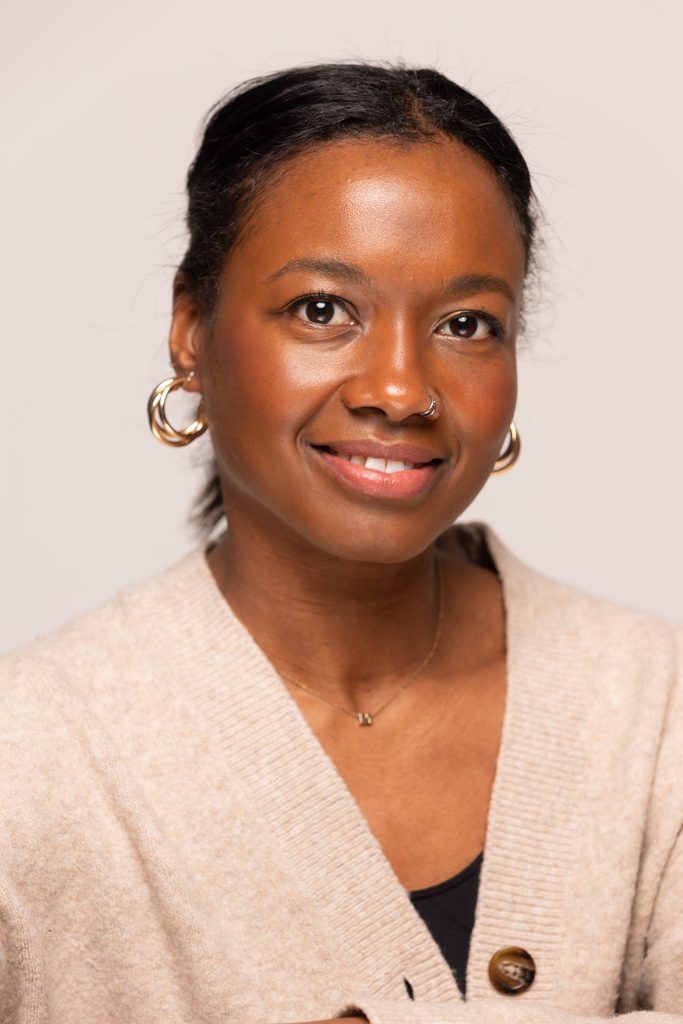
Dr Michelle Peter
Dr Michelle Peter
Head of Research and Operations
Michelle is a social scientist specialising in racial inequities in maternal healthcare, with particular expertise in prenatal screening and genetics. Her research explores how structural racism, healthcare practices and institutional processes shape women’s experiences of care, particularly among Black women and families. A driving focus of her work is addressing the underrepresentation of racially minoritised communities in research and ensuring their experiences and perspectives inform the evidence used to shape healthcare policy and practice.
As Head of Research and Operations at Global Child & Maternal Health, Michelle brings this critical social science perspective and commitment to inclusive research into her leadership of the organisation’s research, programmes and operations. She works to ensure that community knowledge and lived experience are central to how GCMH develops its research, builds partnerships and influences policy and practice. Alongside providing strategic direction, she oversees programme development and delivery, strengthens organisational systems and supports GCMH’s wider ambition to challenge structural inequities across maternal health, SEND and environmental justice.
Alongside her role at GCMH, Michelle is an Honorary Senior Research Fellow at University College London (UCL) and holds advisory positions across research, healthcare and policy initiatives focused on improving equity in maternal and child health.