Two Contexts, One Mission
Learning What Effective Health Education Truly Means
By Demiana Hanna
I remember standing in the heat of Kokrobite, Ghana surrounded by women who had gathered not because they were told to, but because they were eager to understand their health better. No polished slides – just conversation, trust, and a shared willingness to learn.
Months later, I found myself back in London, working within structured, resource-rich systems, where the contrast revealed an unsettling gap.
My name is Demiana, a biomedical science student at King’s College London, a young woman passionate about public and global health, and someone who has worked across community health spaces both internationally and here in the UK. Through my internship in Ghana and my ongoing work in London, I have had the privilege of seeing health education in two very different contexts – shaped by culture, access, infrastructure, and lived experience.
This article is a reflection on those two worlds. By comparing my experiences in Ghana with my work in London, I want to explore what effective community health engagement truly looks like. I will reflect on what each setting has taught me, and how both experiences have shaped my understanding of impact, equity, and personal responsibility in public health.
Cultural differences: learning before leading
In Ghana, culture shaped every interaction. Community life was inherently collective. Knowledge was exchanged through conversation and shared experience rather than formal instruction, and learning was relational rather than transactional. Women’s health was not treated as an isolated or private concern, but as something embedded within community and shared social responsibility. The cultural framework created an environment where discussion felt natural. They wanted to participate, were eager to learn and trust was established through presence rather than authority.
This heavily contrasted with my experiences in London.
Here, health engagement is often shaped by individualism and professional boundaries. Health education typically takes place in structured settings. While these frameworks are essential for safeguarding and accountability, they can restrict dialogue and reduce opportunities for shared learning. Cultural diversity and experiences of inequality further influence how communities perceive and engage with health initiatives, often requiring intentional trust-building.
Experiencing these differences enhanced my understanding of culture as a determinant of health engagement. Ghana highlighted the power of community-led learning, while London underscored the importance of navigating complex cultural and institutional landscapes. Together, these experiences reinforced in order for community health work to be effective, it must begin with cultural understanding. Not delivery of information, but connection.
Work perspective: practice on the ground
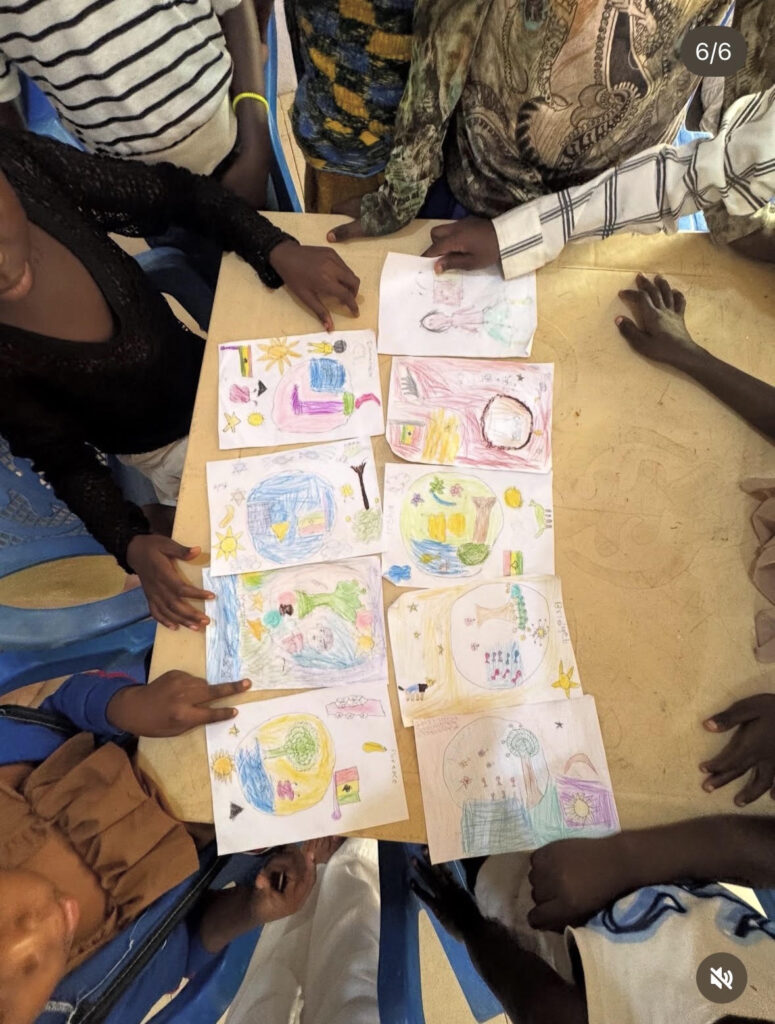
My internship lasted two weeks, during which I participated in seven projects reaching 194 children. Many of these children travelled up to 1.5 hours from surrounding villages to attend sessions. Most of these villages are traditionally fishing communities. Yet due to the arrival of merchants and large industrial ships, families have lost their livelihoods, and many are struggling economically. When asked about their biggest dreams, children repeatedly said they wanted to complete school. They viewed education as their pathway out of hardship.
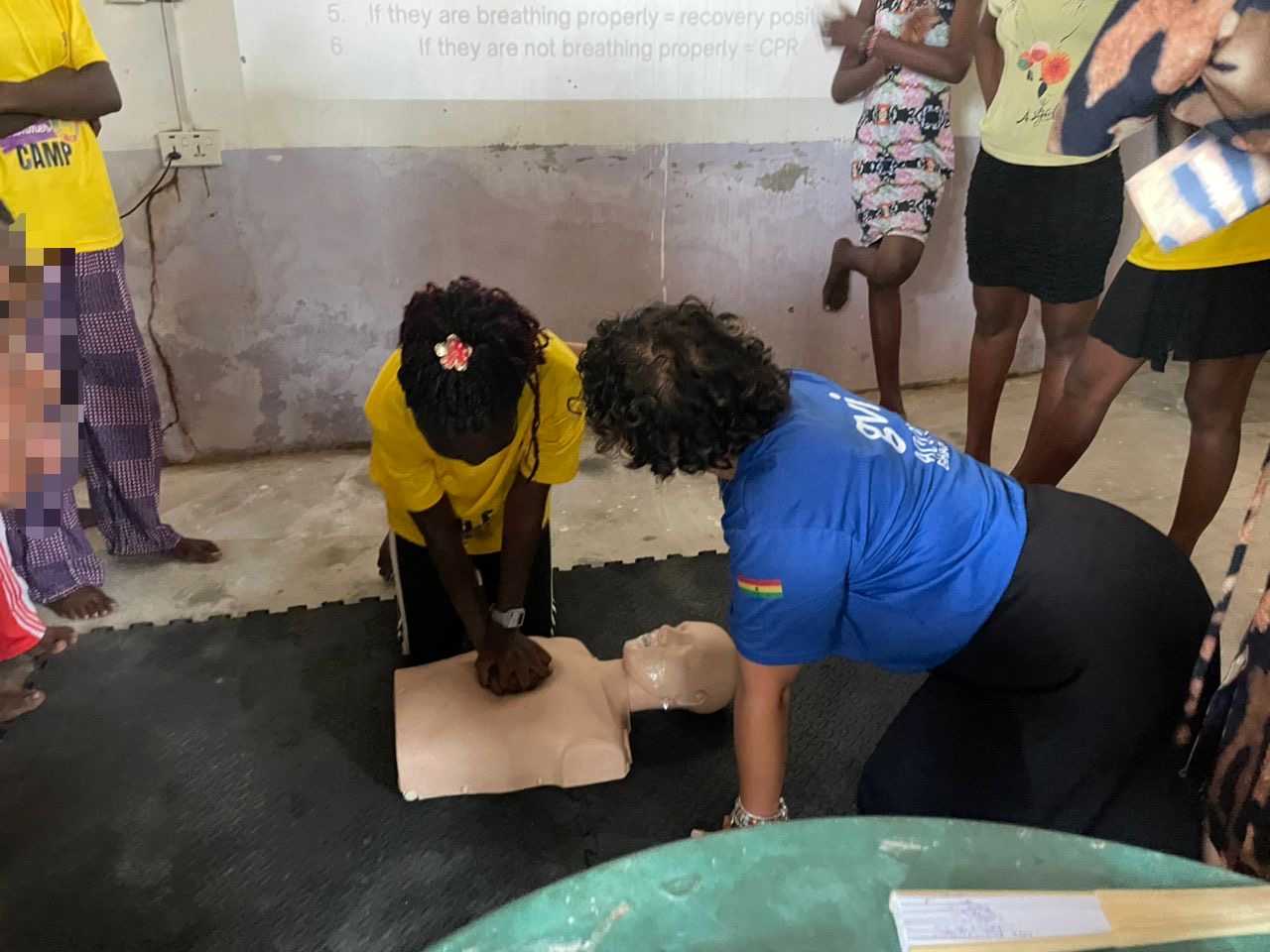
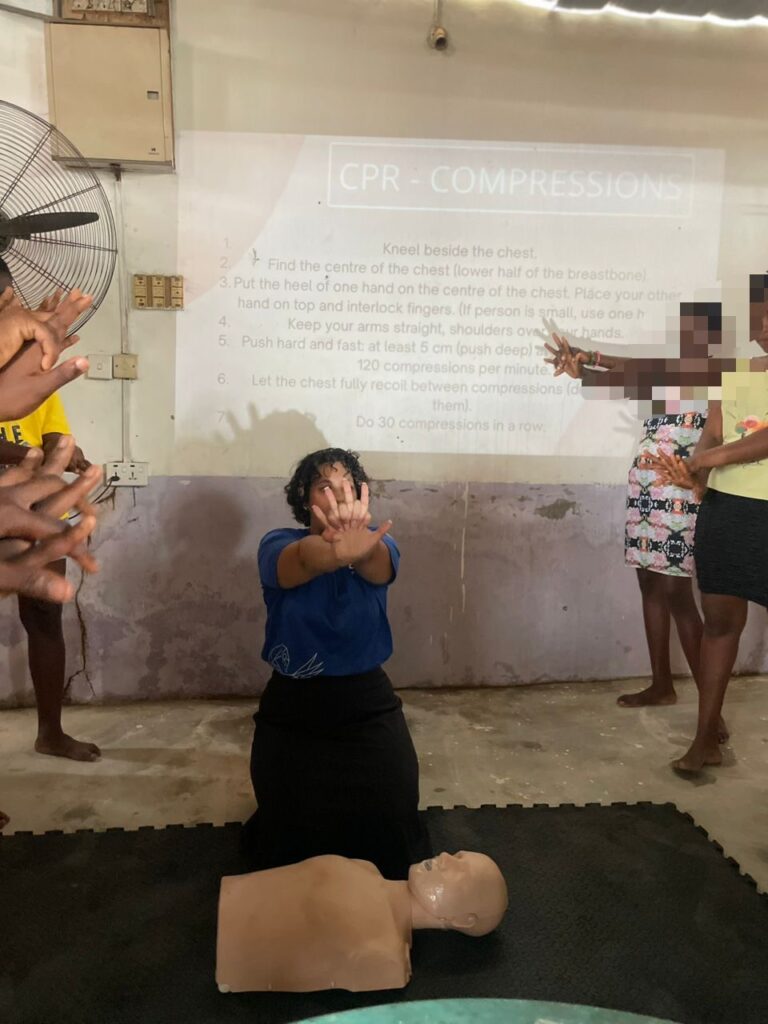
The sessions covered a variety of topics including health education, gender equality, mental health, and first aid/CPR, alongside broader community outreach. Teaching first aid was particularly eye-opening. When I asked the young people for the ambulance number, the most common answer was always “911”. This is a true reflection of the detrimental effect of global media and the unconscious rhetoric that the entire world revolves around the West. The nearest hospital was over an hour away, and during peak traffic, waiting times are unpredictable. In this context, knowing basic first aid and CPR truly carries life-or-death importance, and seeing participants absorb these skills was both humbling and deeply rewarding.
Emotional impact: lessons in resilience and empathy
Working in Ghana was emotionally profound. Witnessing children who had lost economic stability yet maintained determination to pursue education was inspiring. I often sat with local women and discussed their lives, their perception of life in the UK and their women’s health concerns. I was struck by their openness and willingness to share experiences that many in other contexts might consider private. The resilience of these communities that are facing tangible challenges, yet still prioritise knowledge, was deeply moving.
In London, emotional engagement feels different. Resources and infrastructure provide safety nets. However, this doesn’t negate that some young people carry burdens of systemic disadvantage and rightful mistrust of institutions. Building trust requires patience and cultural sensitivity.
We must also consider that when working in areas with a diverse community, many parents are first generation, meaning their children are still affected by experiences and cultural norms from their parents’ countries of origin. It is essential to take intergenerational influences into account when working with young people and not dismiss heritage that is so beautiful and provides a huge aspect of their identity. Emotional investment in community health demands awareness of context, lived experience, and the human stories behind statistics.
Challenges & lessons: navigating realities
Working in Ghana posed challenges – the heat (and I went during their winter), limited resources (teaching a class of 30 children with 1 CPR dummy), and the need to adapt teaching to local knowledge and customs. Delivering CPR or first aid training in a village where the nearest hospital was hours away highlighted the urgency of practical skills. There were many sessions that had to be carried out without electricity – no projector, no fans, only true perseverance. Each session demanded flexibility.
In London, challenges are often more systemic. For example, adhering to guidelines, company policies and coordinating between organisations. In both settings, the lesson was clear: effective health work requires humility, adaptability, and appreciation for different approaches. If we allow constraints (whatever form they come in) to control our work, it can limit creativity and dampen impact.
Reflection & takeaway: shaping perspective and purpose
Ghana reshaped my understanding of public health, especially in regards to personal responsibility. I learned that education, trust, and cultural relevance are as critical as any medical intervention. Returning to London, I now approach structured sessions with a deeper awareness of context and the human stories behind each participant.
For anyone considering volunteering or international experiences, my advice is simple, do it. Listen first, adapt continuously, and value relationships as much as knowledge.
You will meet lifelong friends and gain wisdom from lessons that cannot be learnt from slides, but from the resilience, curiosity, and aspirations of the communities we serve.
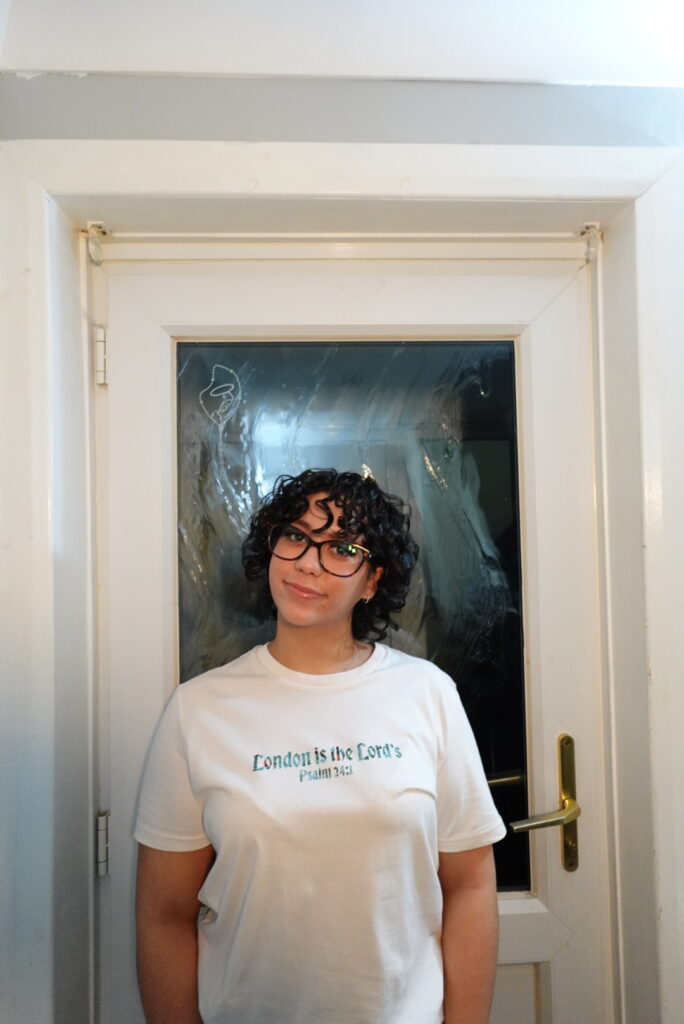
Demiana Hanna
Author
Biomedical Science Student at King’s College London