

Ofsted is putting greater emphasis on inclusion. But does its definition go far enough?
19th October 2026 | Estimated reading time: 6 mins
Dr Michelle Peter, Social Scientist and Head of Research and Operations

Ofsted has published the interim findings from an independent evaluation of its renewed approach to education inspection in England.
There is a lot in the early findings that sounds encouraging, particularly for those of us interested in SEND and educational equity. The renewed framework gives much greater prominence to inclusion and to how schools support children who experience barriers to learning and wellbeing. Early feedback suggests that schools themselves are noticing that shift.
But if inclusion is going to play a bigger role in how schools are inspected, we need to ask: What does Ofsted actually mean by inclusion, and does that definition go far enough?
What has changed?
Ofsted introduced its renewed approach to education inspection in November 2025.
One of the most visible changes was the removal of the previous single overall effectiveness judgement and the introduction of more detailed report cards. Rather than reducing a school to one overall judgement, the new approach is intended to give parents and providers a more detailed picture of where a school is doing well and where improvement is needed.
But another important change is the increased emphasis on inclusion.
Inspectors are now expected to look more explicitly at how schools identify and respond to children who experience barriers to learning or wellbeing. This includes children with SEND, disadvantaged children and those who may be at risk of disengagement.
For families who have spent years trying to get children’s needs recognised and supported, greater accountability around inclusion has the potential to be significant.
So, what is being evaluated?
This distinction is important.
The new evaluation is not an evaluation of Ofsted itself, or an attempt to determine whether school inspection as a whole is effective.
Instead, Ofsted commissioned independent researchers at IFF Research to evaluate its renewed inspection approach.
The evaluation is asking whether the redesigned inspection process is working as intended: how providers experience it, whether inspections accurately reflect what is happening within schools, whether the new report cards are useful and whether the renewed approach is doing a better job of recognising schools’ work with children who experience barriers.
The findings published in October 2026 are interim findings, covering inspections carried out between January and May 2026. A fuller evaluation is expected in 2027.
That means we also need to be careful about what these early findings can tell us. At this stage, the evaluation is largely telling us about providers’ experiences of being inspected. It isn’t yet telling us whether the new framework is improving children’s experiences or reducing disparities in their outcomes.
What has the evaluation found so far?
There are some encouraging findings.
Around 85% of providers agreed that their inspection recognised the work they were doing to support children facing barriers to learning and wellbeing.
61% thought the renewed inspection approach was better than the previous system at recognising this work, while 67% thought the new report cards better reflected their provision for children experiencing barriers.
That suggests that the greater emphasis on inclusion isn’t simply something that exists on paper. Many of the schools and providers experiencing the new inspections appear to recognise a difference.
But the evaluation also identifies challenges.
Schools raised concerns about the workload associated with inspection and its impact on staff wellbeing. 42% of schools said inspection workload was worse than previously, while 48% reported a substantial negative impact on staff mental wellbeing.
And relatively few providers felt that inspection had identified genuinely new areas for improvement.
There are methodological limitations too. The survey received 699 responses, with an average response rate of around 27%, so the findings need to be interpreted in that context.
Still, the early picture suggests that Ofsted’s renewed approach is placing greater emphasis on children who face barriers.
For us, that raises the next question: which barriers?
What does Ofsted mean by inclusion?
This is where things become particularly interesting.
Ofsted’s framework asks inspectors to consider how well schools identify children’s needs and barriers, adapt their provision, work with families and external services, and enable children to participate in and benefit from education.
There is a clear focus on SEND and socioeconomic disadvantage.
Schools also have wider legal responsibilities under the Equality Act 2010, including duties relating to protected characteristics such as race and disability. Equality and discrimination therefore do not sit completely outside the inspection landscape.
But there is a difference between recognising equality responsibilities and systematically looking for inequity.
Race is a useful example.
A school may have an equality policy, an inclusive curriculum and procedures for responding to racist incidents. All of those things matter.
But racial inequity can also show itself in patterns that are less immediately visible.
Who is excluded or suspended?
Whose behaviour is more likely to be interpreted as challenging or threatening?
Who is identified as having SEND, and when?
Who receives support early? Which parents feel that their concerns are listened to?
Who is represented in higher-attaining groups?
And which groups of children continue to experience different outcomes even when the school’s policies appear equitable on paper?
If we want to understand whether a school is genuinely inclusive, those patterns matter too.
What about children at the intersection of race and SEND?
This question becomes even more important when children’s experiences cannot be neatly placed into a single category.
At Global Child & Maternal Health (GCMH), our is particularly concerned with the experiences of Black and racially minoritised children with SEND.

Imagine a school that, overall, provides strong support for children with SEND.
What happens if Black children with SEND are nevertheless disproportionately excluded?
What if some children’s unmet needs are more likely to be interpreted as poor behaviour?
What if racially minoritised parents consistently report having to push harder to get their children’s needs recognised?
Could a school still receive a strong judgement for inclusion?
And, importantly, would inspectors necessarily be required to look for those differences in the first place?
This isn’t about assuming that racial disparities exist in every school. Nor is it about assuming that every disparity is evidence of discrimination.
It is about whether the inspection framework is sufficiently equipped to identify, interrogate and understand disparities when they do exist.
How much should depend on the individual inspector?
There is another important issue here.
Inspection inevitably involves professional judgement. Inspectors have to interpret evidence, speak to staff and children, observe what is happening and reach conclusions about the quality of provision.
But if something as broad as inclusion is being assessed, we need to understand how inspectors are supported to recognise different forms of inequity.
Structural inequity does not always present itself as an obvious incident of discrimination.
It may emerge through patterns in exclusions, attendance, attainment, SEND identification, disciplinary action or access to support. It may also emerge through what children and families say about their experiences.
That raises questions about consistency.
What data are inspectors expected to examine? Are they expected to look at outcomes by ethnicity? How are children’s and parents’ experiences incorporated into the evidence? What training and guidance do inspectors receive to recognise racial bias and structural inequity?
And crucially, how do we ensure that identifying these issues does not depend on the knowledge, experience or awareness of an individual inspector?
These aren’t questions about the intentions of inspectors.
They are questions about whether the framework itself makes inequity sufficiently difficult to overlook.
The questions we think need answering
The increased prominence given to inclusion within school inspection is an important development. There is real potential here.
But as the renewed framework becomes established, we think there are some questions worth exploring:
- How broadly is inclusion defined? Does it adequately encompass race and other protected characteristics alongside SEND and socioeconomic disadvantage?
- What evidence are inspectors expected to examine? Are patterns in exclusions, suspensions, attendance, attainment and access to SEND support routinely examined by ethnicity?
- Can the framework recognise intersectional disparities? In particular, can it identify different experiences and outcomes among Black and racially minoritised children with SEND?
- Whose experiences inform judgements about inclusion? How systematically are children and families heard, particularly where their experiences differ from the school’s own account?
- How are inspectors equipped to identify structural inequity? What guidance and training supports them to recognise patterns of racial disparity and potential bias?
- How consistent will this be? What safeguards ensure that identifying inequity doesn’t depend on what an individual inspector happens to notice?
There is also a bigger question sitting underneath all of these: Are we measuring inclusion, or are we measuring equity?
The two are related, but they are not necessarily the same.
A child can be present in a school. They can access its services. They can technically be “included”. And they can still experience systematically different treatment, opportunities or outcomes.
The interim evaluation suggests that Ofsted’s renewed approach is doing more to recognise the work schools do with children who face barriers. That is encouraging.
But if inclusion is going to become an increasingly important part of how we understand whether schools are serving children well, we need to make sure that the definition is broad enough, and the inspection process robust enough, to recognise the full range of barriers children may experience.
For us at GCMH, the question now is not simply whether Ofsted is looking at inclusion.
It is whether the framework enables inspectors to see inequity when it is there.
For citation, collaboration, or licensing enquiries, please contact: michelle@globalcmh.org.
All rights reserved.
About The Author:
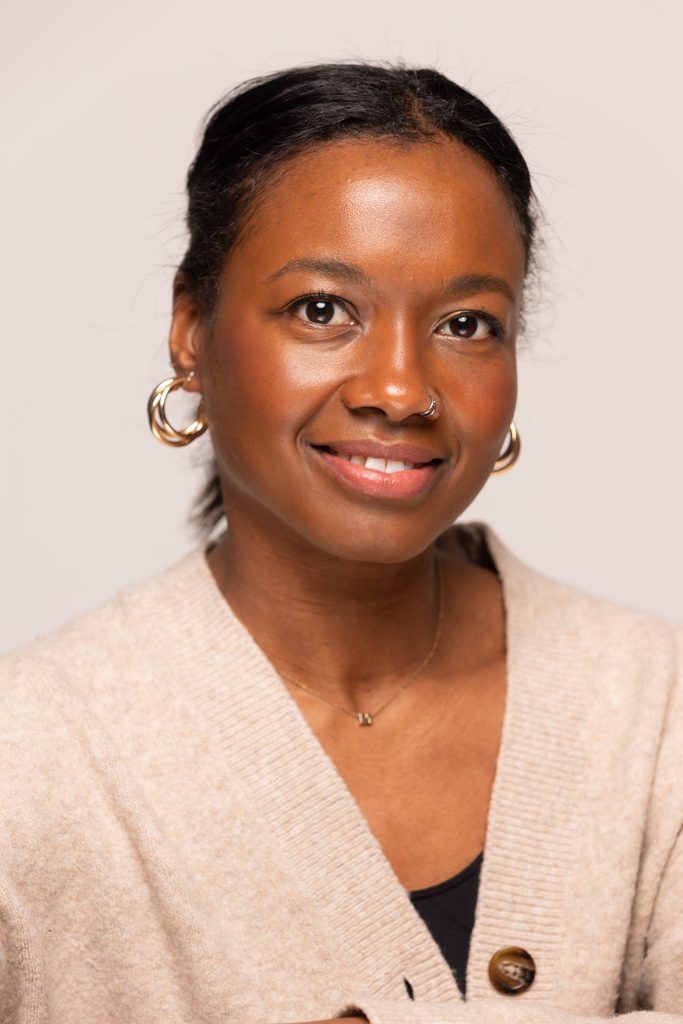
Dr Michelle Peter
Head of Research and Operations
Michelle is a social scientist specialising in racial inequities in maternal healthcare, with particular expertise in prenatal screening and genetics. Her research explores how structural racism, healthcare practices and institutional processes shape women’s experiences of care, particularly among Black women and families. A driving focus of her work is addressing the underrepresentation of racially minoritised communities in research and ensuring their experiences and perspectives inform the evidence used to shape healthcare policy and practice.
As Head of Research and Operations at Global Child & Maternal Health, Michelle brings this critical social science perspective and commitment to inclusive research into her leadership of the organisation’s research, programmes and operations. She works to ensure that community knowledge and lived experience are central to how GCMH develops its research, builds partnerships and influences policy and practice. Alongside providing strategic direction, she oversees programme development and delivery, strengthens organisational systems and supports GCMH’s wider ambition to challenge structural inequities across maternal health, SEND and environmental justice.
Alongside her role at GCMH, Michelle is an Honorary Senior Research Fellow at University College London (UCL) and holds advisory positions across research, healthcare and policy initiatives focused on improving equity in maternal and child health.
A